A behind-the-scenes look at one of the most important and least talked about practices in cannabis cultivation.
At Blackstone Valley Cannabis, we talk a lot about quality. The freshness of our flower, the potency of our concentrates, and the consistency of our products from batch to batch. But there is a lot that happens long before a plant ever makes it to harvest, and one of the most important practices we have invested in is tissue culture. It is not a term you hear often outside of cultivation circles, but we’re hoping to change that.
Here is what tissue culture actually is, why it matters, and why we made the decision to incorporate it into how we protect our genetics at BVC.
What Is Tissue Culture?
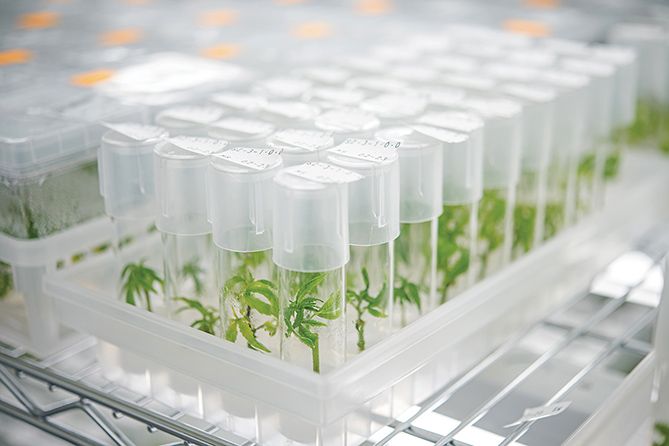
Tissue culture, or TC, is a method of propagating plants at the cellular level. Most people are familiar with traditional cloning, which involves taking a cutting from a plant, rooting it, and growing it into a new plant. Tissue culture works differently. Instead of taking a cutting, TC extracts material from the meristem, which is the growth tip of the plant where all new cells are produced. This is the rawest form of genetic material a plant has, and working at this level gives cultivators capabilities that traditional cloning simply cannot match.
From that meristematic tissue, plants can be grown in a sterile, controlled lab environment, tested for pathogens, viruses, fungi, and other systemic issues, and then inducted into the cultivation program as clean, verified, first-generation genetics. The result is a plant that represents the truest expression of the strain, free from accumulated stress, damage, or contamination.
Why Traditional Cloning Has Its Limits
Traditional cloning is not bad. It is how the vast majority of cannabis is grown, and it works. But it has a fundamental limitation that most consumers never think about: every time you clone a plant, you are passing along everything that plant has experienced, good and bad.
If a mother plant has been exposed to stress events like an HVAC failure, a lighting issue, temperature swings, or pest pressure, those stressors leave a mark. Vigor declines, resistance to pathogens weakens, and potency can drift. Over time, even without any single dramatic stressor, plants cloned repeatedly from the same mother can slowly degrade. What you end up growing is not quite the same plant you started with, and the difference shows up in the final product.
Some issues are even harder to detect. Hop latent viroid, for example, is a systemic pathogen that can be present in a plant and passed down through clones without any obvious visible symptoms, quietly degrading genetic expression over time. Once those genetics are lost to contamination of this kind, they are gone. TC is one of the few tools that can identify and address these issues before they become permanent.
What Tissue Culture Makes Possible
When we send plant material to the lab for tissue culture, it is not just about cleaning up genetics. It opens up a whole new level of visibility into what we are actually working with. Plants coming out of tissue culture are 20 to 30 percent more vigorous than their traditionally cloned counterparts. They show stronger resistance to stress events. And because we are starting from verified first-generation genetics every time, we have a level of consistency and confidence in our strains that would not be possible any other way.
We started our TC program with MAC1, Muff Berry, and Amnesia Haze, three strains that our customers know and love. While the results are not in yet, we are excited to see what this process brings to BVC and how it can improve our flower from the ground level.
How the Process Works
The tissue culture process is not instant, and that is by design. Each strain takes a different amount of time to move through the TC process, depending on what issues, if any, are identified along the way. On average, it takes several months for a strain to be fully inducted into the TC program, from initial extraction through lab testing, treatment if needed, and final verification.
Once a strain is through the process, those verified plants become our mother stock, and we select our best clones from there. It is the best of the best approach that starts long before anything goes into the ground.
Why We Made This Investment
No cultivation facility is immune to plant stress. Equipment fails. Environments fluctuate. Even under the best conditions, genetics can drift over time in ways that are subtle but cumulative. We invested in tissue culture because we are serious about protecting what makes our products worth coming back for.
When you buy flower, a concentrate, or a pre-roll from Blackstone Valley Cannabis, you are getting a product that traces back to genetics we have actively worked to preserve and verify. The MAC1 you pick up today is the same MAC1 we set out to grow, not a degraded version of it that has been cloned dozens of times and quietly lost something along the way.
That is what tissue culture gives us, and ultimately what it gives you: consistency, quality, and the confidence that what is on our shelves is genuinely the best of what we grow. We think that is worth talking about.
Have questions about our cultivation practices or what goes into the products we carry? Come in and ask us. Our team loves talking about this stuff, and we are always happy to pull back the curtain on what makes BVC different. 💚